
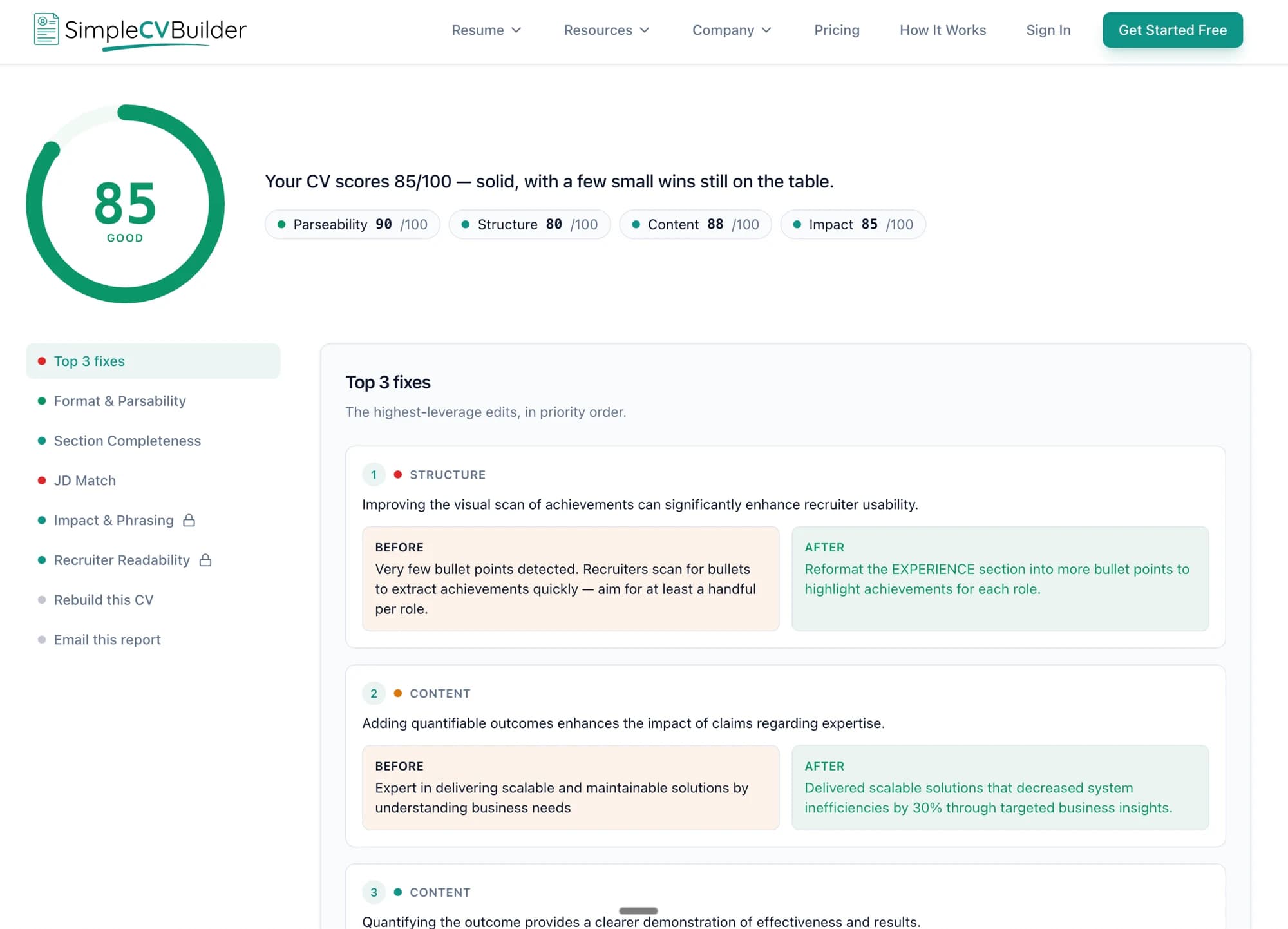
A free ATS resume checker tells you what an applicant tracking system will likely extract from your resume before a recruiter reads it. Upload a PDF or Word file, or paste the text. No sign-up. You get a score out of 100 and the three fixes to make first, usually in under 30 seconds.
How US ATS systems read your resume
Employers collect applications in an applicant tracking system. Workday1, Greenhouse and iCIMS2are three common examples. When you apply, the system parses your resume into a candidate profile: contact details, job titles, employers, dates, degrees and skills. Many application forms now fill themselves in from your upload, which is that parse happening in front of you. Check every field before you submit; Greenhouse's own candidate help says parsing "can make mistakes."3
US conventions matter too. The USC Career Center calls a one-page resume standard practice, with two pages acceptable for 10 or more years of work experience, and advises minimizing personal information such as your birthdate and photo.4
What the ATS score measures
The score is out of 100, built from four sub-scores that match the four chips on your report. Content is weighted at about 35%, parseability 25%, structure and impact 20% each. A score of 90 or above is excellent, 75 to 89 good, 50 to 74 needs work, and below 50 critical.
Parseability
Rule-based, no AI. Can the text be selected, is it a scan, how many columns does it use, and can an email and phone number be found? A scan, or a parseability score under 50, ends the check there.
Structure
We check for standard sections a parser recognizes (summary, experience, education, skills), page count, and how much of your experience is in bullet points.
Content
An AI grader scores your bullets against a fixed rubric: opening verbs, quantified results, passive phrasing and generic claims. Every criticism quotes your own resume.
Impact
Impact looks for evidence of leadership, ownership and seniority. A resume that lists duties instead of results will score low here even if it parses perfectly.
The five ATS failures we check for first on US resumes
Two-column layouts
Many design-heavy templates put skills in a sidebar. Parsers can read across the columns and scramble the order, and Greenhouse lists columned layouts as a parse failure.5 Use one column.
Contact details in headers
Your name, email and phone in a Word header can go missing from your profile. Greenhouse flags contact details in headers, footers and text boxes.5 Keep them in the body.
Scanned PDFs
An image of a resume is not text. Greenhouse lists image uploads among its parse failures.5 Export a text-based PDF, or upload the .docx.
Non-standard section names
Headings like "Where I've Been" can hide your work history from a parser looking for Experience. Save the personality for your summary.
Missing role keywords
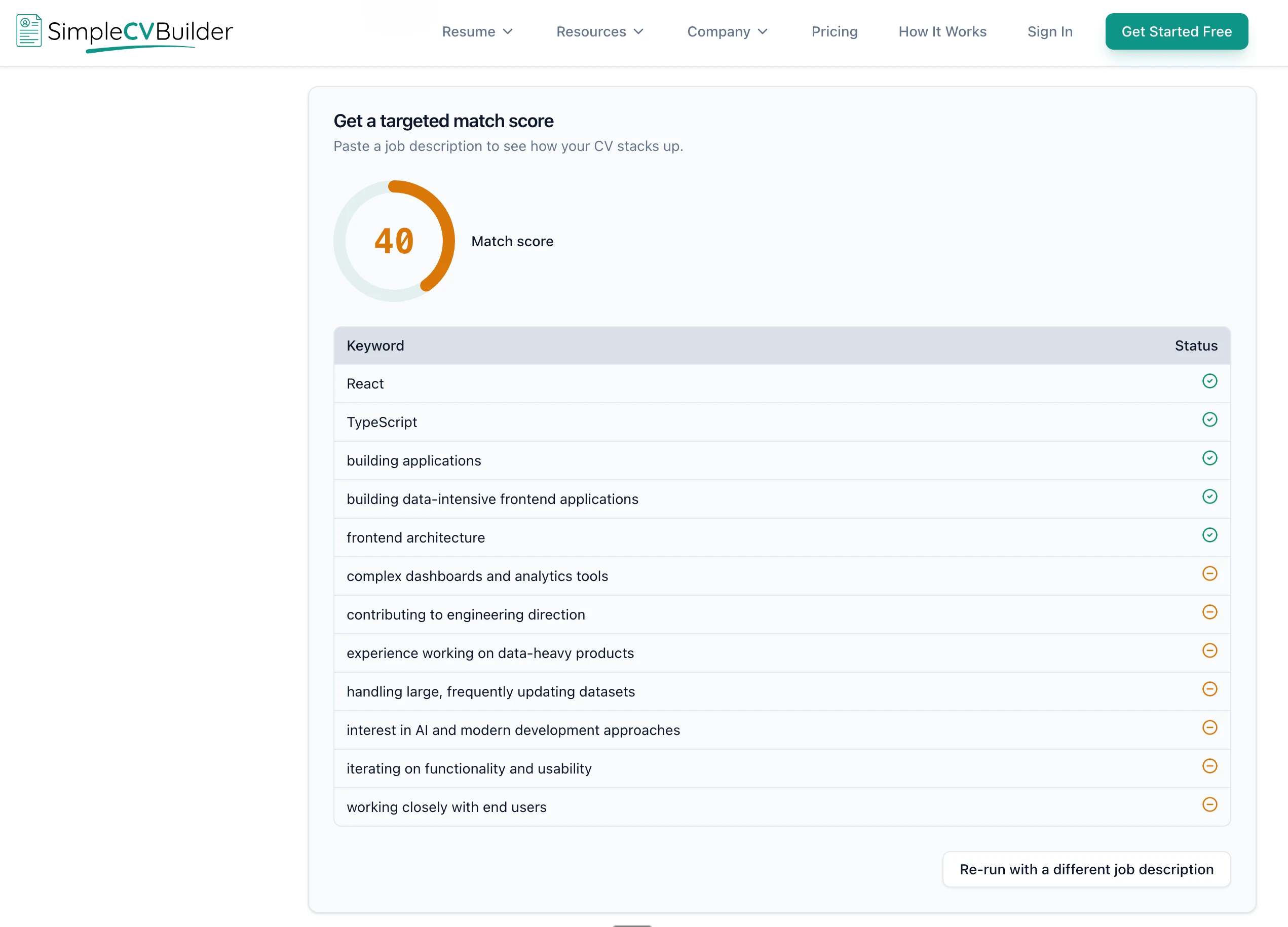
Recruiters often filter candidates by the skills and titles in the posting. Paste the job description into the checker to see how many of its keywords your resume covers, then add only the ones you can back up.
ATS resume checker or resume scanner: what is the difference
They are two names for the same kind of tool, and neither is the employer's ATS. Ours checks that your file can be read, then grades structure, content and impact, and matches keywords when you add a job description.
What to do after your free ATS resume check
Fix the three items at the top of your report first; they are ranked by impact.
- Our ATS guide covers formatting, keywords and content in more depth.
- Browse resume templates; ten of the 12 are single column.
- Create a free account to see the full fix list and keyword gaps. Sign up from your report and your resume opens in the builder.
- Tailor your resume to a specific job: paste the posting and compare your match score before and after. Free accounts get three runs a day.