TL;DR. An international student resume is not one document. It is three document families. A US resume is one page, reverse chronological, no photo, no date of birth, and carries a number on every bullet. A UK CV runs to two pages and opens with a short personal statement. Europass and country-specific EU CVs often include a photo, date of birth, and a grading-scale conversion. You pick the format by the job's country, not by what you studied. This guide covers all three, shows how to frame OPT, STEM OPT, the UK Graduate visa, and other post-study work permits honestly, and walks through translating your education so a foreign recruiter can read your transcript in seven seconds.
Last updated: April 2026.
The numbers explain why this matters. 1,177,766 international students studied at US institutions in 2024/25, a 5% year-over-year increase, per the Institute of International Education's Open Doors 2025 release. OPT participation climbed 21% to 294,253, and 95,384 students received STEM OPT authorization in 2024, a 54% jump. A global applicant pool is competing for the same recruiter attention as a domestic one, on documents formatted for the local market. Get the format wrong and a strong candidate is filtered before the content is read.
The US resume — the one-page rule
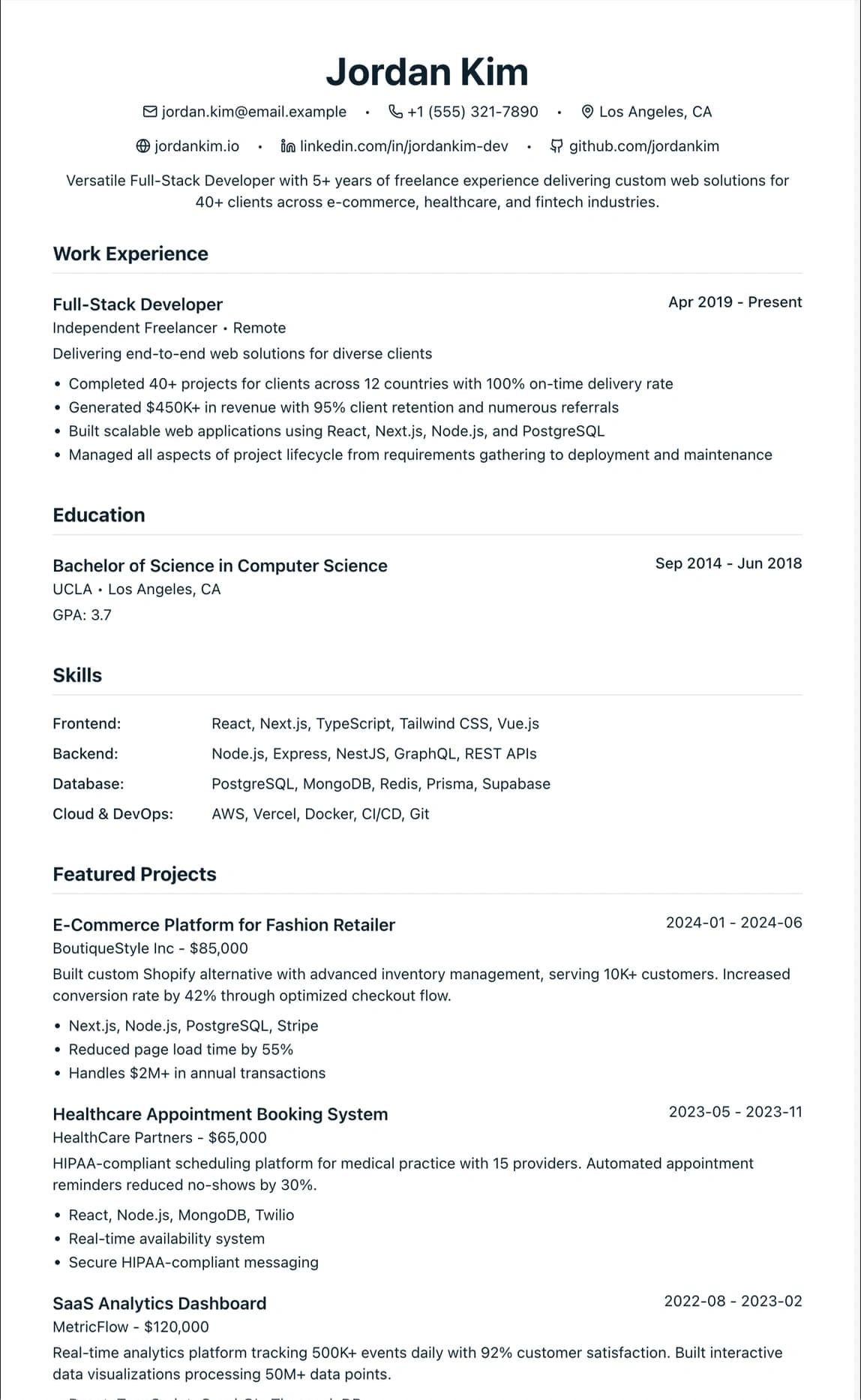
A US resume is an aggressively compressed document. For any applicant without a PhD or a senior title, the target is one page. Beyond one page is a flag, not a badge. Recruiters skimming 200 resumes an hour do not reward thoroughness; they reward editing.
The US conventions are specific and easy to get wrong:
- No photo. US anti-discrimination practice means most employers prefer resumes without photos; attaching one can cause the file to be rejected on intake.
- No date of birth, no marital status, no nationality. These fields are standard in many EU resumes and absent in US ones. Removing them is not hiding; it is complying with local norms.
- Reverse chronological order. Most recent role first. Functional or skills-first layouts look evasive to US recruiters.
- US date format. Month and year (e.g.,
Jun 2024 – May 2026). Not06.2024or2024/06. - A number on every bullet. Headcount, budget, percentage, time saved, users served. Bullets without numbers read as descriptions, not achievements.
- A short summary block at the top. Three to four lines, keyword-rich, targeted to one role family.
- Work authorization disclosed in one line. See the visa section below.
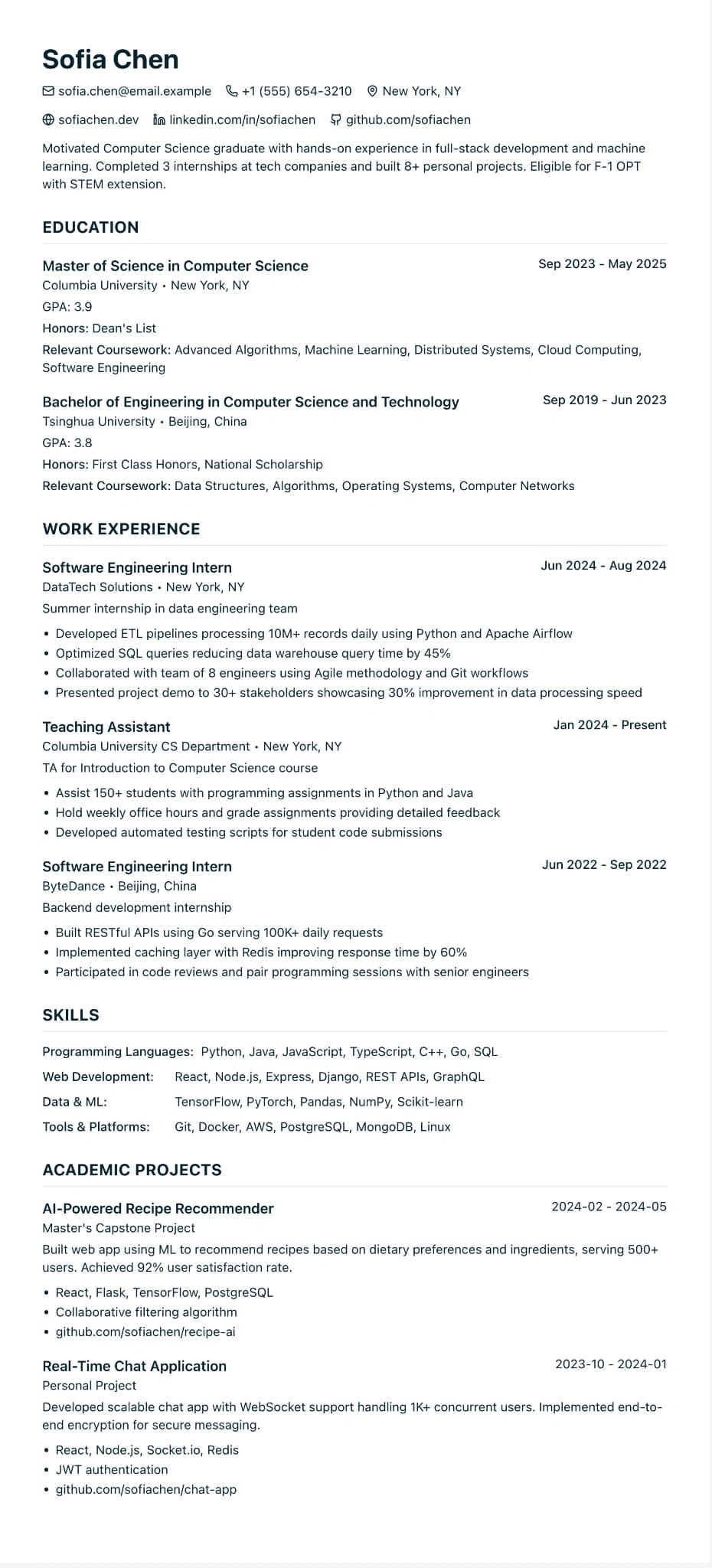
Early career and zero post-college US experience is the main international-student profile, which means Education usually sits above Experience, and Projects and Coursework are named sections rather than filler. A strong project entry with a GitHub link and a measurable result beats a weak internship bullet every time.
The UK CV — two pages and a personal statement
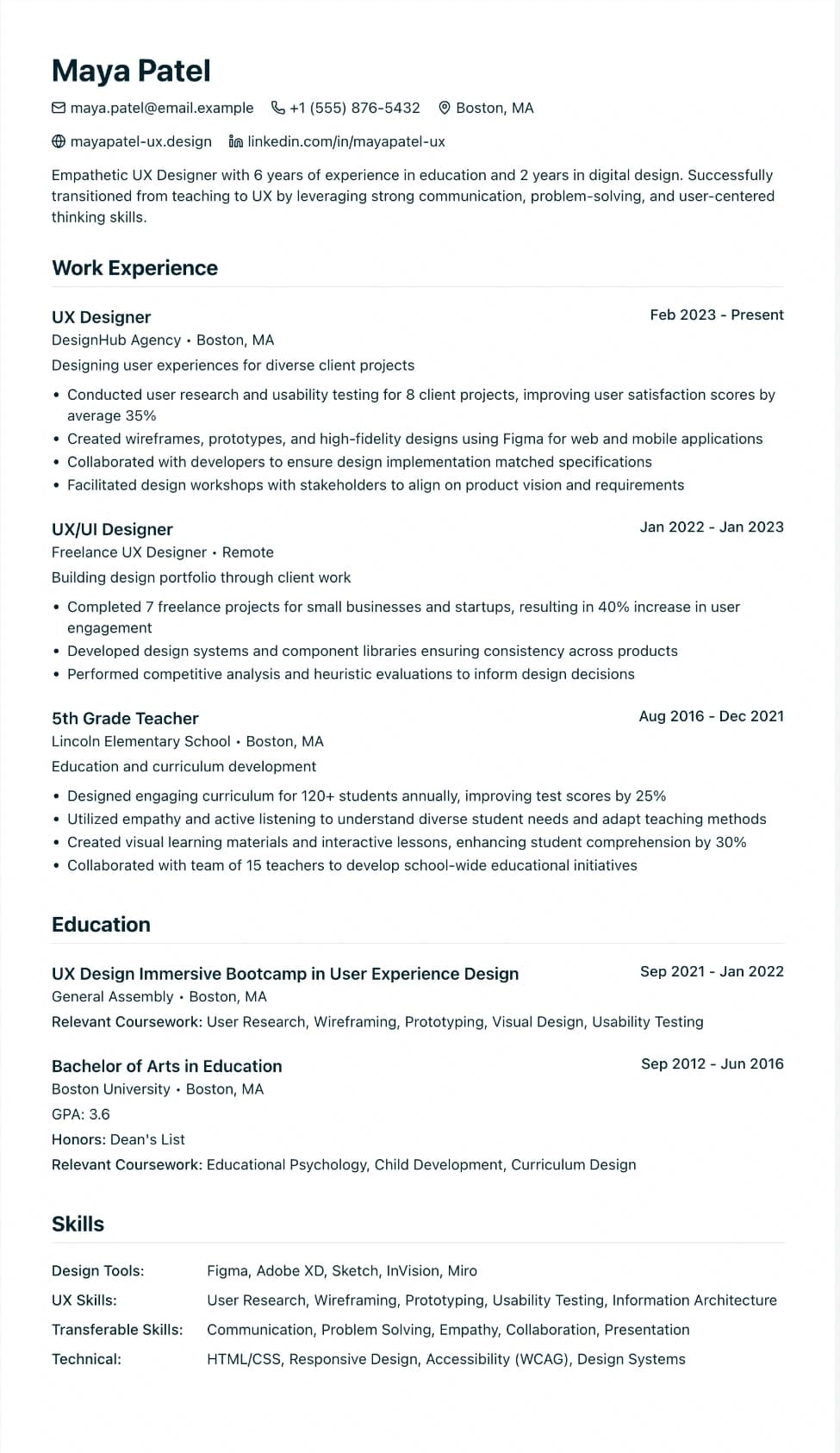
The UK CV is longer and softer at the top. The format runs to two pages by default and opens with a three- to five-line personal statement, a short prose block that states who you are, what you are looking for, and one or two differentiators. Skipping the personal statement on a UK CV reads as incomplete, in the same way a US resume without a summary block reads as rushed.
Other UK conventions:
- Two pages is the expected length. One page looks thin for anyone past first year.
- Photo is optional and usually omitted in the private sector. Public-sector and academic applications may vary.
- DD/MM/YYYY date format throughout, or
Month YYYYin text. - Interests section is common and useful. It surfaces personality and signals extracurricular leadership in a way US resumes rarely do.
- References "available on request" is the standard closing line.
- Grades are written as UK classifications (First Class, 2:1, 2:2) with a conversion in parentheses for foreign degrees.
The UK Graduate visa is the equivalent hook to US OPT: up to two years of unrestricted post-study work (three years for PhD graduates), no employer sponsorship required. State it in a single line near your contact block. For longer-term roles, the Skilled Worker visa (formerly Tier 2) requires a licensed sponsor. The UK government maintains a public register of employers who can sponsor, which you should check before applying.
EU, Europass, and country-specific CVs
Within the EU, conventions change by country. The cross-cutting rule is that personal data (photo, date of birth, sometimes nationality) is more often expected than not, and ignoring that convention looks careless, not principled.
- Europass is the EU's standardized CV format, free from the European Commission's official Europass platform. It is the default for EU institutions (European Commission, European Parliament, EU agencies) and for most cross-border academic mobility applications. It is not the right document for US private-sector roles and is rarely preferred by EU private-sector employers, who favor a cleaner national-style CV.
- German Lebenslauf typically includes a professional photograph, date and place of birth, and a tabular layout. Strong grades (1.3, 2.0) are listed alongside the German grading scale (1 to 5). A cover letter (Anschreiben) is expected with every application.
- French CV runs to one or two pages depending on seniority, includes a photo more often than not, and places a short
ProfilorObjectifblock at the top. Dates sit on the left margin in a chronological column. - Dutch, Nordic, and Spanish CVs sit between the UK and German conventions: one to two pages, optional photo, slightly less personal data than a Lebenslauf.
The short answer when applying across Europe: build a Europass only when the job posting asks for it, and otherwise default to a cleaner national-style CV matched to the target country.
Should you mention your visa status?
Yes. Briefly, honestly, and once. Hiding work authorization is the single most common mistake international applicants make, and it consistently backfires at offer stage.
Two clean phrasings cover almost every situation:
- If you are authorized to work without employer sponsorship (F-1 OPT, STEM OPT, UK Graduate visa, Canadian PGWP, Australian subclass 485 visa, EU Blue Card, green card), state it in one line:
Authorized to work in the US on F-1 OPT through May 2027; STEM OPT extension eligible.Recruiters scan for this and move on. - If you will need sponsorship (H-1B, UK Skilled Worker, equivalent), do not hide it. Write
Will require employer sponsorship for long-term employment (H-1B).Many employers sponsor routinely. The ones that do not will filter you out cleanly at application rather than at offer, which is the outcome you want.
The USCIS rules sit behind this framing. F-1 students on OPT are authorized to work for any US employer in their field of study for 12 months, and USCIS allows a 24-month STEM OPT extension for graduates of eligible STEM degrees, a total of up to 36 months without employer sponsorship. That is a significant hiring incentive for the employer, not a liability to apologize for. For UK roles, the Graduate visa grants two years of unrestricted work. Both deserve a single visible line.
Translating your education
A US or UK recruiter should be able to read your education block in seven seconds and understand the level, the field, and the strength of the result. Raw foreign credentials do not do that.
Three techniques cover most cases:
- Translate the degree name functionally. A
Diplôme d'ingénieuris closest to a US master's degree in engineering. A Chinese 学士学位 is a bachelor's degree. Write the functional English level first and keep the original in parentheses:Master's Equivalent in Mechanical Engineering (Diplôme d'ingénieur), École Centrale Paris, 2024. - Convert grades to a scale the reader uses. US recruiters read the 4.0 scale. UK recruiters read First, 2:1, 2:2. If your GPA is strong after conversion, include both:
GPA 3.8/4.0 (First Class equivalent, 85/100). If the conversion is ambiguous, omit the raw number and use rank or honors instead (top 5%, magna cum laude, distinction). - Use a recognized credential evaluation if available. For regulated fields (engineering, nursing, medicine, accounting), a NACES-member evaluation translates your transcript to US equivalence and is often required anyway for licensure.
Coursework, projects, research — what to include
A common failure mode on international-student resumes is either listing every course taken, which looks padded, or listing none, which wastes the space. The rule of thumb is seniority.
If you are first-year or early-career, name a Relevant Coursework sub-block under Education with four to six course titles that match the target role family, then add two or three course-sized projects as full entries with a problem, an action, and a measurable result. Link GitHub or a portfolio. A later-stage graduate with an internship or two should trim coursework to zero or a single line; projects stay only if they demonstrate a skill the internship did not, and research moves to a dedicated Research section only if publications exist. With two or more years of post-degree experience, remove coursework entirely and keep one or two flagship projects only if they map directly to the target role.
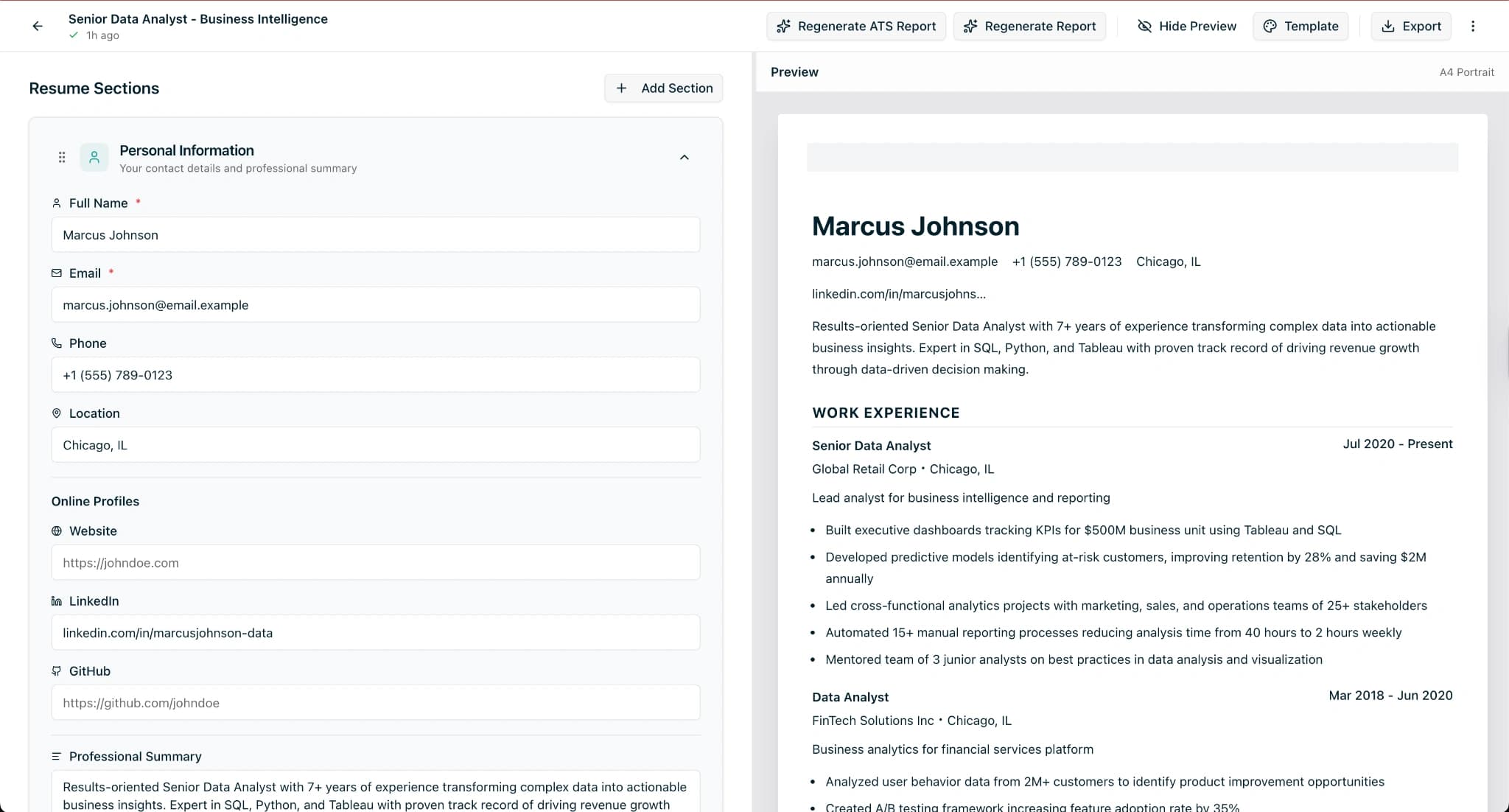
International Student template — free, US/UK/EU adaptable
Single-column, ATS-parseable layout with dedicated Projects, Coursework, and Work Authorization blocks. Free on SimpleCVBuilder, no watermark, no credit card.
Addressing "no US / UK work experience"
You almost certainly have relevant experience. It is not labeled "US employment," but it counts.
- Campus roles: teaching assistant, research assistant, resident advisor, lab demonstrator, library assistant, career-services peer mentor. These are real jobs with real deliverables. Lead with the number of students you supported, the hours taught, the lab budget managed.
- CPT and internship experience: curricular practical training (CPT) is US-employer work and belongs in the Experience section with exact dates and quantified results.
- Course projects with real stakeholders: capstone projects with industry sponsors, hackathon deliverables used by the sponsor afterward, client-facing UX projects done as part of a class. Label them as projects, not internships, but include the stakeholder name and the outcome.
- Open-source contributions: accepted pull requests to known repositories are verifiable evidence of skill. List the repo, your contribution type, and the merge status.
- Student society leadership: engineering society president, consulting club treasurer, international-student association event lead. Treat these as work entries with headcount managed, budget, and events delivered.
- Community and volunteer work in your home country translates cleanly when you frame it by problem and result rather than by organization name.
SHRM's 2025 Talent Trends survey found that 51% of US organizations now use AI for recruiting, up from 26% in 2024. That means your course-project bullet is being read by the same keyword-matching layer as a ten-year veteran's. Write for the match, not for the story.
US resume vs UK CV vs Europass — side by side
| Attribute | US Resume | UK CV | Europass / EU |
|---|---|---|---|
| Length | 1 page | 2 pages | 2–3 pages |
| Photo | No | Optional, usually omitted | Often included (Germany, France) |
| Date of birth | No | No | Often included |
| Personal statement | Short summary block (3–4 lines) | Required, 3–5 lines | Profile block or Personal statement field |
| Grades | GPA on 4.0 scale | UK class (First, 2:1) | National scale + conversion |
| References | "Provided on request" or omitted | "Available on request" | Contacts listed directly is common |
| Date format | Jun 2024 – May 2026 | 06/2024 – 05/2026 | Varies by country |
| Visa disclosure | One-line work authorization | One-line Graduate visa / sponsorship note | Nationality field often present |
| Education order | Above Experience for early career | Below Experience for experienced hires | Below Experience |
| Coursework | Sub-block for early career | Minimal, usually omitted | Listed if relevant |
ATS reality for international applicants
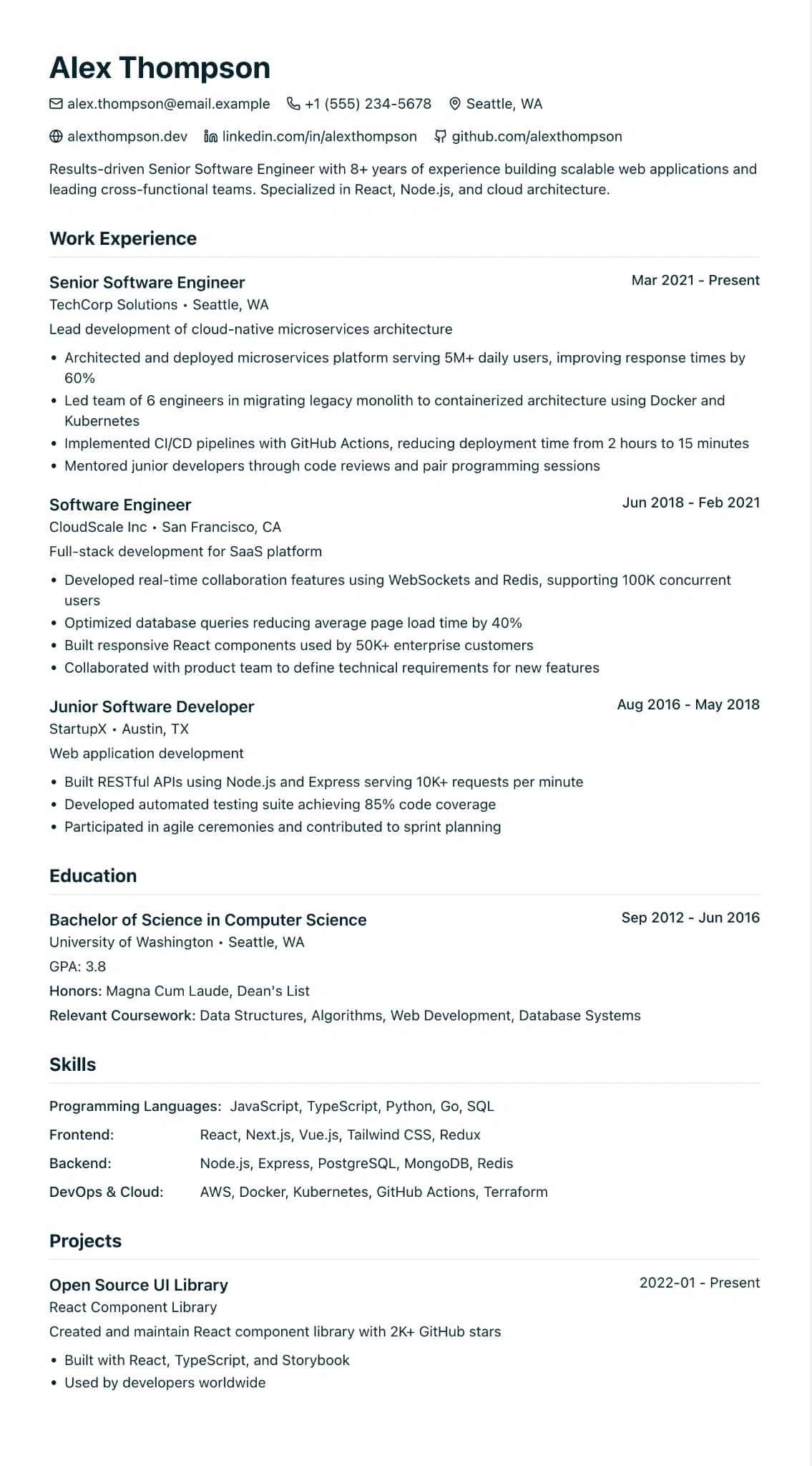
Most US and UK applications go through an applicant tracking system before a human sees them. Two-column layouts with sidebars, text embedded in graphics, and decorative fonts are the most common reasons a technically strong international candidate never gets read. A single-column, standard-heading layout parses cleanly on Workday, Greenhouse, Lever, and Taleo, the four systems that handle the majority of graduate recruiting at large employers. None of this is glamorous work; it is box-ticking that decides whether the resume even reaches a human.
The mitigation is straightforward: a single-column template, standard section headings (Experience, Education, Projects, Skills), and a keyword pass against the actual job description. SimpleCVBuilder's AI ATS analyzer runs the keyword pass on the free tier. The full ATS checklist covers the layout and parsing rules.
Your cross-market switch checklist
Before you send a resume into a new market, run through this list:
- Length matches the market: 1 page US, 2 pages UK, 2–3 pages EU.
- Photo rule matches the market: no photo US and usually UK, photo likely Germany and France.
- Personal data matches the market: no DOB or marital status US and UK, often included for Germany and France.
- Date format matches the market:
Jun 2024US,06/2024UK, country-specific EU. - Grades converted and labeled: 4.0 scale for US, UK classification for UK, both for EU.
- Personal statement or summary block is present and targeted to the role.
- Work authorization stated in one line: OPT / STEM OPT / Graduate visa / PGWP / 485 / sponsorship required.
- Degree name translated functionally with the native title in parentheses.
- Every bullet has a number, and projects are named entries not buried filler.
- File name is
FirstName-LastName-Role.pdf, notresume-final-v4.pdf.
A candidate who nails eight of ten of these will outperform a better-credentialed one who skips the format match. International students are not losing on skill. 57% of international students in the US are enrolled in STEM and 34% of H-1B workers transition from student visas. They lose on format mismatch. The fix is mechanical, and it is free.
Related reading on SimpleCVBuilder
- Free CV builder guide: what actually ships free, with a focus on UK and international applicants.
- Free resume builder guide: the US-framed version with ATS comparisons.
- Career change resume guide: useful if you are switching field as well as country.
- ATS-friendly resume guide: layout rules that apply in every market.
- AI resume builder: the features that matter most for translating foreign credentials.
- Pricing: Pro at $12.99 per month unlocks unlimited saved resumes, which is the main reason cross-market applicants upgrade.
Frequently asked questions
Do international students use a CV or a resume in the US?
In the US, use a resume — one page, reverse chronological, no photo, no date of birth. US employers use "CV" only for academic, research, or medical roles where a longer publication list is expected. In the UK, Ireland, and most of the EU, "CV" is the default term and the document runs to two pages with a short personal statement. If you are applying to both markets, keep separate files rather than one hybrid.
Should international students put their visa status on a resume?
Yes, briefly and honestly, when it helps the reader. If you are authorized to work without sponsorship — F-1 OPT or STEM OPT in the US, Graduate visa in the UK, PGWP in Canada, subclass 485 in Australia — say so in one short line near your contact block. If you will need sponsorship, do not hide it. Many large employers sponsor routinely, and a mismatch discovered at offer stage is a worse outcome than a clean filter at application.
How do I mention OPT on my resume?
Keep it to one line under your contact details or in a short Work Authorization section. A clean phrasing is "Authorized to work in the US on F-1 OPT through [month/year]; STEM OPT extension eligible." Do not write a paragraph explaining the program — recruiters who hire international graduates already know what OPT is, and recruiters who do not can look it up. The goal is to answer the sponsorship question in one glance.
How do I handle the "no US work experience" problem?
You already have relevant experience — it just is not labeled "US employment." Campus jobs (TA, RA, lab assistant), course projects with real stakeholders, open-source contributions, student society leadership, case competitions, and CPT internships all count. Frame each entry with a problem, an action, and a measurable result. Avoid listing experience purely by country; list it by relevance to the role.
Do I need to convert my GPA to the US 4.0 scale?
If your GPA is competitive after conversion, include both — your original grade and the US 4.0 equivalent, clearly labeled. If the conversion is ambiguous (many national systems do not map cleanly), omit GPA and list class rank, honors (First Class, cum laude), or percentile instead. Never leave a raw foreign number that a US recruiter cannot interpret in three seconds.
Is a European Europass CV acceptable for US applications?
No. Europass is designed for EU institutions and cross-border academic mobility inside Europe. Its multi-page structure, photo, and personal data fields (nationality, date of birth) are normal in the EU but unusual and sometimes unwelcome in the US private sector. For US applications, build a separate one-page US-format resume. Keep your Europass for EU public-sector and academic applications where it is specifically requested.
Should I translate my degree name into English?
Translate it functionally, not literally. A French "Diplôme d'ingénieur" is closest to a US master's degree in engineering, not a bachelor's — so write "Master's Equivalent in Mechanical Engineering (Diplôme d'ingénieur)". A Chinese 学士学位 is a bachelor's degree. Keep the original title in parentheses so a recruiter or credential evaluator can verify it. For regulated fields, reference WES or NACES evaluations if you have them.
Can international students use SimpleCVBuilder on the free tier?
Yes. The free tier includes the International Student template, the AI ATS analyzer, and an unlimited number of PDF exports from one saved resume, with no watermark and no credit card required. That covers a focused OPT or Graduate-visa job search. Students applying to several markets at once — US, UK, and home country — typically upgrade to Pro at $12.99 per month for unlimited saved resumes and the AI bullet generator.